





Beyond the Text: An Exploration in ‘Anthropology of Islam’ in the Indian Context 
– Nadeem Hasnain
I am honoured to deliver SC Dube Memorial Lecture and thank the organizers for giving me this opportunity. Going down memory lane I vividly remember my first meeting with late Prof.SC Dube in 1973. I had just registered for my Ph.D. work when one day late Prof. KS Mathur my teacher, mentor, and supervisor asked me to come to his residence on the university campus in the evening. When he called me in I saw a towering personality sitting in the bed smoking a pipe. When he told me that I was called just to meet Prof. Dube, I was awe struck as I had already read some of his work and deeply impressed by his scholarship. When he spoke I was in a state of deep awe because of his language. His command over English as well as Hindi was phenomenal. Later, whenever I heard him in either of the two languages, it was really a treat and feast to the ears.
ONE
Today, I wish to share with you some of my thoughts on a relatively neglected area of anthropological research-‘Anthropology of Islam and Muslim societies with reference to India’.
In the ongoing discourse in social sciences in India, ‘Anthropology of Islam’ is a relatively neglected area especially in the studies on how Muslims make sense of Islam in everyday life. Before taking up the case of Indian/South Asian Islam and Muslim communities let me take a brief view of the history of anthropological exploration of Islam and Muslims.
Since the birth of anthropology, anthropologists were fascinated by religion and its practitioners and they were conducting field work in colonial settings of Africa, Asia and Polynesian societies. Thus, early ethnographic studies of religion were concerned only with the primitive or simple societies. They left the study of Islam and Muslim societies for historians and orientalists. Perhaps, Evans- Pritchard was the first anthropologist who studied Islam and Muslim society per se. His seminal work The Sanusi of Cyrenaica, though focused on an aspect of Sufism in Libya(1949),may be taken as the beginning of anthropological exploration of Islam and any Muslim society. Here it will not be out of place to mention lack of interest of anthropologists to study monotheistic religions-Islam, Christianity, and Judaism, notwithstanding the impact of Max Weber’s The Protestant Ethic and the Spirit of Capitalism(1920). Things began to change since early 1950s when several younger anthropologists turned their attention towards Islam and Muslim societies and started conducting ethnographic study of Muslim societies.
|
Nadeem Hasnain (Ph.D.) is former Professor of Social Anthropology, University of Lucknow, Lucknow. Email ID:nadeemhasnain@gmail.com |
Notable among them are Fredrick Barth’s study of Pathans of Swat Valley titled Political Leadership among Swat Pathans (1959) though he emphasized more on ethnicity than religion. Then came Clifford Geertz’s Islam Observed: Religious Development in Morocco and Indonesia (1968) which opened the door for the study of Islam and Muslim societies and inspired a number of anthropologists to take up ethnographic study of this neglected field. Some noteworthy studies in this domain were published by James Siegel (1969), Dale Eickelman (1976), Michael Gilsenan (1973) Abdul Hamid el-zein (1974), Michael Fischer (1980), Ernest Gellner (1981), and several others followed. Needless to say unlike the orientalists interested in scriptural or textual Islam, the anthropologists were more interested in everyday Islam or ‘lived Islam’. With the gradually expanding anthropological scholarship during this period came the critical intervention of Talal Asad, an American anthropologist of Moroccan origin, in the form of his The Idea of an Anthropology of Islam (1986) contributing to the conceptual and theoretical debate.
While American anthropologists were influenced by Clifford Geertz’s study, the British counterparts were largely influenced by Ernest Gellner through his landmark study Muslim Society (1981).
THREE
The scenario of the study of Islam and Muslim societies in Indian anthropology is conspicuous by its almost absence as not many anthropologists tried to enter this field of study. Ghaus Ansari (1961), a student of DN Majumdar who later moved to Vienna, may be described as the pioneer of the study of Muslim society in South Asia with his publication of Muslim Castes of Uttar Pradesh. It was followed by Imtiaz Ahmed, another student of Majumdar from Lucknow University who moved to Jawaharlal Nehru University, Delhi after doing his Masters. Publication of four edited volumes by him dealing with caste system, marriage and divorce, kinship and other issues among the Muslims of India may be taken as turning point. Around the same time, TN Madan’s edited volume titled Muslim Communities of South Asia: Culture, Society, and Power (1976) came as an important contribution to the study of Muslim societies in India. Nadeem Hasnain’s Shias of India: A Study in Society and Culture (1986) is, till date, the first and the only full-fledged study on Shia Muslims of India. Its revised and updated version was published as Shia Muslims of India: Religion, Society, and Culture (2018). Meanwhile between 2006-08 Hasnain published three edited volumes on Islam and Muslim societies consisting of around fifty papers contributed by scholars of anthropology, sociology, political science, economics and Islamic studies. Since then astray papers and books kept coming but most of these were from non-anthropologists.
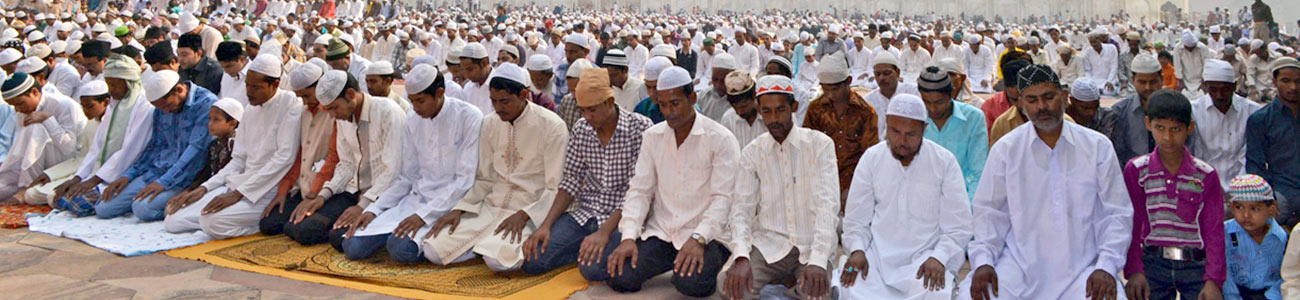
One of the reasons why Islam has been depicted the world over in a stereotyped manner and largely in negative image has been lack of ‘field studies’ in various social science disciplines. The depiction of Islam and Muslims in largely monolithic framework is mainly based on the ‘book view’ of Muslims or textual interpretations. It is only during the last 3-4 decades that some sociologists and anthropologists have done some field work among the Muslim communities in different parts of the world. That is how such terms as ‘Living Islam’, ‘Lived Islam’, ‘Folk Islam’, ‘Popular Islam’, ‘People’s Islam’ and ‘Islam in Practice’ have come into being. The dominant theme of such studies of Islam and Muslims portray the way Muslims live everyday life and making accommodation and adaptation with the local cultural setting. But, a vast Muslim world still remains unexplored beyond ‘textual Islam’.
Writing on the everyday life in South Asia, Diana Mines & Sarah Lamb (2002) rightly say that everyday life centers on the daily lives and experiences of people. It concerns with the ways people live, make, and experience their worlds through practices such as growing up and aging, arranging marriages, exploring sexuality, negotiating caste/caste like hierarchies or enduring and creating violence. It conveys important dimensions of social-cultural life that could not be imparted solely via abstract theoretical accounts and generalities.
South Asia is also a cultural region because of significant numbers of historical and cultural continuities. Because of this they share many practices and concepts even within the amazing diversity. Barbara D. Metcalf (2009) also supports this by saying that “Muslims here lived in a context of considerable religious pluralism. The diversity in Islam has, in part, been shaped by the sub-continent’s multiple linguistic and cultural traditions. Of course, differences are also there over what should be the correct standard for cultural and political life.” Most of the western scholars thought of the sub-continent as the periphery of Islam and Muslim life instead of thinking of it as a centre. And this was despite of the fact that the Muslims of this region constitute more than one third of the entire Muslim population of the world. The fact remains that this region remains a very rich site for the study of Islam and Muslims. The oil rich middle eastern Muslim societies were always their priority because of availability of funding from the governments due to their economic and strategic interests and geo-politics.
Looking at the dichotomy between Text and Practice, TN Madan (2006) very rightly says that “as an anthropologist, I am primarily interested in what people actually do in their lives, and not in what is given in their tradition, whether textual or oral. Needless to say, Muslim communities around the world have both kinds of traditions.” Illustratively, Clifford Geertz’s seminal comparison of Islam in Morocco and Indonesia in his Islam Observed (1968) may be recalled which is a modern classic of anthropological literature, and an exemplary study for anyone who wishes to understand, on the basis of observation, the character of Islam as a lived religion. Madan (ibid) goes on to say that to make any impact at all, Islam had to be ‘malleable’, ‘multivocal’ and ‘syncretistic’. It’s approach had to be ‘pragmatic’ and ‘gradualistic’ -a matter of, in Geertz’s words, ‘compromises, half way covenants, and outright evasions….’. Clifford Geertz also made the observation that in Indonesia Islam did not construct a civilization; it appropriated one. The case of Islam in the Indian sub-continent is similar, though to a slightly lesser extent. Peter van der Veer (1994) suggests that the popular practices of Muslims are not really “Islamic” but an expression of a Hindu sub-stratum with only an Islamic veneer.
Before the entry of sociologists and anthropologists in this field, "the study of Islam was originally the province of theologians, or those who relied on textual sources for an understanding of their faith. Such a mode of study naturally led to a great deal of emphasis being placed on the unity and commonality of beliefs, attitudes and sentiments that were supposed to exist right across the Islamic world" (Imtiaz Ahmed, 2004). It has been contested by anthropological researches on Muslim societies. They point out the diversity in the actual content of everyday religious experience of Muslims. Significantly, both forms of Islam- "the formal, textual, pragmatic and local–coexist in a state of tension. The elite continually contests the local tradition of Islam. People acknowledge the general concepts dictated by the ulema(clerics/religious scholars), but they choose to live according to more particularistic notions of Islam which relate to their everyday experiences" (Ahmed, ibid). That is why Arab Islam, South Asian Islam, Indonesian Islam, African Islam and African-American Islam may be distinguished from each other.
‘Anthropology of Islam’, as Richard Tapper(1979)writes, studies how Muslims (individuals, groups, societies, nations)present/construct themselves as Muslims as a major constituent of their identity as markers of identification- diet (pork and alcohol being a taboo),myth and genealogy(holy descent), conflict (Shia/Sunni/Wahabi/Sufi).Anthropology of Islam involves translating and humanizing ordinary believer’s cultures as well as analyzing the production and use of Islamic texts.
This brings in a very pertinent issue dealing with the study of Islam in the local contexts. Robert Redfield, an eminent American anthropologist put forward an influential model for the study of religions and civilizations. This seminal contribution is known as Little and Great Tradition (1956). ‘Little Traditions’ largely refer to local/regional traditions of smaller groups transmitted mostly orally. On the contrary ‘Great Traditions’ are textual tradition of the elite maintained and transmitted through sacred texts, scriptures and epics. People with Great Tradition consider themselves as the protector of the sacred values and act as guardians. They may be seen passing moral judgments, reprimanding and ‘correcting’ the ‘erring’ and ‘deviants’. In the Indian context it is being done through the Friday sermon (Khutba) when large number of Muslims congregate, through the Tablighee Jamaat and various other means. The fact remains that the great diversities in Islamic practices is largely due to the development of local traditions, beliefs and practices varying from region to region. The cultural ecology maintains the axiom that ‘Culture is nothing but response of the people to the local ecological conditions’. Dale Eickelman’s essay, "The study of Islam in local contexts" (2007) deals comprehensively with this debate.
Edward Said’s criticism of Orientalism demonstratively prove how the relationship between the scholar and the subject shapes the scholarship. Leekens Bull (2007) quoting Elzein (1977) says that the dichotomy of folk Islam (little tradition) versus elite Islam (great tradition) is infertile and fruitless. This dichotomy is part of an Islamic elite’s attempt to dominate the discourse about what constitutes real religion. Talal Asad in his seminal contribution ‘The Idea of an Anthropology of Islam’ (1986) suggests that "there are three common anthropological solutions to this problem. The first suggests that there are no such theoretical objects as Islam and therefore there is no need to deal with the diversity between Muslim societies. The second uses Islam as a label for a heterogeneous collection of items each of which has been designated Islamic by informants. The third holds that Islam is a distinctive historical totality which organizes various aspects of social life" (Lukens Bull, 2007)
In order to understand the nuances of South Asian Islam, Sandria Freitag (1988) talked about the role of ashraf (higher, elite, social/caste groups) and non-elite ajlaf (lower social/caste groups). The ashraf always regarded their beliefs, values, and behaviour pattern as sharia-centric (Sharia/Shariyat refers to Islamic canonical law based on the teachings of the Qoran and the traditions of the Prophet) and in consonance with the requirements of the sharia/shariat while those of the lower social groups as akin to their Hindu neighbours which needed to be abandoned.
The above assertion pointed towards the lack of interest to understand the process of indigenization of Islam. This indigenization gives a distinct colour to Islam and its practices in different regions of the world. Under the onslaught of the ‘purists’ and ‘reformists’ a number of indigenous practices (which are not necessarily violation/deviation of the fundamentals of Islamic faith) have been given up or eliminated. Lukens Bull (ibid) adds a significant point to this whole discourse when she brings in the anthropological tradition of ‘salvage ethnography’ in which the anthropologist records and preserves the "way things were".
FOUR
The most glaring dichotomy in Islam may be seen in the realm of social equality and the accompanying practices. Islam is widely and popularly seen as a religion based on egalitarianism ruling out inequalities in social life. This is the textual view of Islam and this proclaimed egalitarianism remained largely an ideal. The ‘lived Islam’/‘Islam in practice’ exposes this contradiction. According to Islamic faith as seen in the dictates of their holy book Quran and the life, teachings and traditions of Prophet Muhammad every Muslim is born equal in the eyes of God and thus any religious practice or any aspect of social life cannot be used to justify the practice of social inequality.
Not to speak of India, the entire Muslim population of South Asia, including Pakistan and Bangladesh, demonstrate the presence of social stratification in the form of caste system. Muslims are not socially homogenous or monolithic and thus not a ‘cultural community’ in the sense that they possess different cultures in regional variations. They live through layers of identities in a complex society. At some places they may be seen through a provincial -linguistic/ethnic category as in Ladakh (Jammu & Kashmir) where they have mongoloid physical features, a tribal-biradari/kinship group as in Lakshdweep (where they live as, perhaps, the only known matrilineal Muslim community of the world), through such tribal groups as Gaddi and Bakriwal (in Jammu & Kashmir where they come under scheduled tribes), through such sectarian divisions as Sunni, Shia, Ismaili, Bohra, Qadiani etc. or through various Islamic schools/maslak such as Deobandi and Barelvi. In this socio-cultural/ethnic heterogeneity as described above, there is at least one thing in common and that is the practice of social inequalities, by and large, on the lines of Hindu caste system.
Islam, Muslims, Caste and Social Stratification
The question whether the concept or the idea of caste can be applied to a system of social stratification of a community professing a faith other than Hinduism has often been posed. It is true that the egalitarian social order of Islam stands in sharp contrast with the ideology of caste, yet the ‘Indian Islam’ and ‘Hindu caste system’ have been able to achieve a substantial compatibility. Hutton (1951) sounds convincing when he says that when Muslims and Christians came to India, the caste was in the air and the followers of even these egalitarian ideologies could not escape the infection of caste. Moreover, an overwhelming majority of Indian Muslim population come from the lower Hindu castes who have been coming into the fold of Islam to escape from social persecution and the oppressive socio-economic disabilities. They were also attracted and lured by the social egalitarianism of Islam but the search for equality proved a mirage. In many cases, there were improvements in their socio-economic conditions, yet the goal of social equality remained elusive. Moreover, in most of the cases, the people embracing Islam gave up their religious faith but not the caste that was brought forward even to a new socio- religious milieu. Thus, it would be apt to say that while Islam may not be having castes or caste-like groupings, the Indian Muslims do have. Thus, the interface between ideology and social structure in the context of caste may be full of academic issues requiring discussion.
But here I stay clear of the issue whether the model of social stratification among the Indian Muslims is the replica of the Hindu caste system or not and, consequently, the terms such as caste and caste system among the Indian Muslims would be used in a conveniently loose manner. It is undisputedly true that there are groups of people among the Muslims who are organized more or less like the Hindu castes but this is also true that they are less rigid because Islam, theoretically at least, permits marriage between different classes of believers. Nazir (1993:2898) takes a fresh look on this whole issue:
"It is necessary to make a distinction between a caste system and caste labels: the former refers to a local system of hierarchically ordered corporate groupings involving social division of labour, occupational specialization, unequal dependence,, and recruitment by birth only; the latter refers to a set of non-local, non-corporate named group which provide a ranking hierarchy, and which do not involve occupational specialization, unequal dependence, and recruitment by birth only "
Perhaps, the ‘caste system’ and ‘caste-like groupings’ among the Indian Muslims with all their fluidity may be better analyzed and understood through this observation. Even within this framework there might be regional variations in the nature of Muslim stratification in India.
The popular hierarchical model may be classified, loosely and broadly into three groups viz. Ashraf, Ajlaf, and Arzal
Ashraf includes the Muslim nobility that claim to be the descendants of early Muslim immigrants, Sayyad, Shaikh, Mughal or Pathan, as well as descendants of higher Hindu castes such as Muslim Rajputs. Clean occupational castes, such as Julaha (weavers), Darzi (tailors), Qassab (butchers), Hajjam (barbers), Kunjra (green grocer), Mirasi (bards, singers and musicians), Manihar (bangle sellers), Dhuniya (cotton carders), Gaddi (graziers, milkmen), etc. were included in the category of Ajlaf (mean). The third category of Arzal (literally very mean) includes the unclean or ritually polluting castes such as Bhangi or Mehtar and Lalbegi (sweepers and scavengers). Like the Hindu caste system there is a hierarchy among ashraf and non-ashraf castes and all of them are traditionally endogamous i.e., as per norm they are supposed to marry within their castes.
Muslim OBCs as Ethnographic Categories: A Brief Overview
It is now historically established that most of the Muslims in India did not come from Arabia or other regions from where the message of Islam came. Muslim traders represented the earliest phase of Islam in India and nomadic Sufi saints who were instrumental in attracting the oppressed and exploited lowest strata of Hindu society into the fold of Islam.
When we look at the occupationally specialized backward castes of both Hindus and Muslims, we can identify three categories.
- Castes that are now entirely Muslim.
- Castes that have larger Muslim than Hindu sections.
- Castes that have larger Hindu than Muslim sections.
In the first category come those occupational castes that are now entirely Muslim; their corresponding Hindu castes either do not exist, or if they exist at all, they have altogether different names. Some such castes are Atishbaz (firework makers), Bhand (jesters), Bhishti (water carriers), Gaddi (graziers), Mirasi (musicians and singers), Qasab (butchers), MominJulaha (Muslim weavers), etc.
In the second category, which have larger Muslim than Hindu share, include castes such as Darzi (tailors), Dhuniya (cotton carders) Kunjra or Kabariya (green grocers), Manihar (bangle/bracelet makers), Saiqalgar (metal sharpeners) and Rangrez (dyers and cloth printers).
The third category may contain those castes that have a larger Hindu than Muslim share. In this category of clean occupational castes come Kumhar (potters), Nai or Hajjam (barbers), Teli (oil pressers), Dhobi (washermen), etc. The Muslim Bhangi/ Mehtar/ Lai Begia (sweepers and scavengers) constitute, perhaps, the only untouchable section of the Muslim population.
A significant aspect of the occupational castes among the Muslims is the disappearance of certain caste groups due to social or techno-economic change. The Rangrez (dyers and cloth printers), Bhatiyara (inn keepers) and Saiqalgar (metal sharpeners) have almost disappeared as social units. The ‘Peoples of India Project’ carried out by the Anthropological Survey of India gives brief but rich and reliable ethnographic accounts of all the castes and communities of India including the Muslim OBCs.
A notable fact about the Muslim OBCs, especially the relatively larger caste groups, is that though some members may have moved out from their traditional occupations, still most follow their forefathers. This occupational mobility has been detrimental, yet it has another dimension that is equally important. Like their counterparts in the population, they have been hard working from the beginning. Many enterprising members of different caste groups made the best of professions and attained prosperity. The Ansaris and Qures his of Uttar Pradesh and Rajasthan are the obvious examples. Some of the other groups among them who upgraded their technology and adopted new marketing strategies and showed competitive entrepreneurial skills, prospered such as the artisans/entrepreneurs of Meerut, Moradabad, Aligarh and Firozabad from western Uttar Pradesh and Bhadohi and Varanasi in eastern Uttar Pradesh. Yet, at the same time, we find a vast multitude of masses living in impoverished conditions in rural as well urban areas of the country. These ‘technological communities’ of India and their Hindu counterparts deserve a better deal from the society and the state.
‘Ashrafization’ for Upward Social Mobility
With reference to the Hindu caste system MN Srinivas has empirically established that in order to achieve upward social mobility/status elevation the lower castes have this strong tendency to emulate the language, life style, religious practices/rituals and cultural norms of the local highest caste or the dominant caste and he coined the word Sanskritization for this process. In the Muslim context the same process may be described as Ashrafization i.e., a process through which the non-ashraf groups try to elevate their social status by emulating the norms, values, customs, traditions, language, naming, clothing etc. of ashraf groups. For instance, as soon as a lower caste group is able to make some money and property it enforces purdah (burqa/naqaab) for its women and takes to Haj, adopts caste surnames of the ashraf groups and various other markers of social identity. The weavers (Julaha groups) takes the surname Ansari referring to the Ansars– Prophet Muhammad’s companions, Qassab/Chikwa (butchers) add Qureshi (the tribal group Quresh, Prophet Muhammad came from), Khan (claiming Pathan or Afghan ancestry, Hajjam (barbers) become Salmani, Kunjra (Vegetable venders) become Raeen, Darzi (tailors) become Idrisi, Bhisti (drawers of water) become Abbasi, Lohar (iron smith) and Badhai (carpenters) Saifi and so on. These occupational caste groups organize themselves into caste based organizations or Jamaats/biradaris and then go for political empowerment. Significantly, in North India, such non-ashraf groups takes to speaking chaste Urdu and adopts Islamic/Quranic phrases such as Inshaallah (if God wishes), Khuda-na-khwasta (God forbids), Jazakallah (God shall give reward) etc. The naming also undergoes changes. New adopted names are either on revered Islamic personalities and the first name being literary (in Urdu/Persian/Arabic) followed by new caste surname.
An Aspect of Indigenization of Islam in India/South Asia
Of the three agencies responsible for the spread of Islam viz. Invaders, Merchants/Traders and Sufi saints, the first two had minimal influence and role in the spread of Islam in South Asia. The dominant message of these Sufi saints was love and oneness of humanity. They provided healing touch to the oppressed and marginalized sections of Indian society and that is why the lower caste groups suffering under the oppressive caste system accompanied by all sorts of social, economic and political disabilities looked at the abode of these saints as shelter. The Muslim mystic or Sufi saints played a significant role in the spread of Islam through the process of indigenization despite the fact that most of them came from outside India-Iran, Central Asia and other regions. A R Momin (1977) while writing on the Indo-Islamic tradition says that these mystics "maintained that Islam should be prescribed to the people in their own cultural medium. They had an attitude of tolerance and understanding towards Hindus and Hinduism. They also adopted many Hindu customs and ceremonies (Nizami, 1961)." Of all the Sufi silsilah/orders the Chistiya order played the most prominent role and was most popular among the masses. Some of these Sufis took to peasantry, dressed like the local peasants and took to vegetarianism. The Sufis learnt the local languages. This provides the local context of Islam in the Indian sub-continent and led to a number of syncrestic traditions, composite culture and served as a bridge between Hindus and Muslims. In a way it may also be described as the ‘parochialization of great tradition’ as the sociologists and anthropologists may like to describe.’
Concluding, ‘Lived Islam’, the product of the peaceful story of accommodation and adaptation to local practices, may be summed up by terms like ‘syncretic’, ‘hybrid’, ‘tolerant’,’ people’s Islam’ , ‘moderate Islam’ and some such terms. The need is to see more beyond the ‘Textual Islam’ to understand ‘Lived Islam’.
Acknowledgement
This lecture was delivered in the Indian Anthropological Congress,2024 held at Bhopal under the auspices of Indian National Confederation and Academy of Anthropologists.
References
| Ahmed, Akbar S. (1993) |
|
Living Islam: From Samarkand to Stornoway. Penguin Books. |
|
Ahmad, Imtiaz (1983) (ed.) |
|
Modernization and Social Change among the Muslims of India. Manohar. |
|
(ed.) – (1978) |
|
Caste and Social Stratification among Muslims in India. Manohar, |
|
Ahmad, Imtiaz& (2004) |
|
Lived Islam in South Asia. Social Science Press |
|
Asad, Talal (1986) Barth, Fredrick (1965) |
|
“The Idea of an Anthropology of Islam” Centre of Contemporary Arab Studies. Georgetown University. |
|
Dupret, Baudouin, (2013) Thomas Pierret, Paulo G. Pinto & Kathryn Spellman Poots (ed.) |
|
Ethnographies of Islam: Ritual Performances and Everyday Practices, Edinburgh University Press |
|
Eickelman, Dale & (2007) James Piscatori |
|
Muslim Politics, Princeton University Press |
|
Evans-Prichard, EE(1949) Fluehr- Lobban, Carolyn (1994) Geertz, Clifford (1968) Gelner, Ernest(1981) |
|
The Sanusi of Cyrenica. Hassel Street Press |
|
Hutton, JH (1969) |
|
Caste in India. Oxford University Press |
|
– (2020) |
|
Shia Muslims of India: Religion, Society, and Culture, New Royal Book Company |
|
-(ed.) – (2006) |
|
Aspects of Islam and Muslim Societies. Serials Publication. |
|
-(ed.) – (2006) |
|
Islam and Muslim Communities in South Asia. Serials Publication, |
|
-(ed.) – (2008) |
|
Beyond Textual Islam. Serials Publication |
|
Kurzman, Charles (1998) |
|
Liberal Islam: A Source Book. Oxford University Press. |
|
Momin, AR (1977) |
|
The Indo-Islamic Tradition, Sociological Bulletin. Vol. 26:2. |
|
– (2001) |
|
Muslim Communities of South Asia. Manohar Publications |
|
Nazir, Pervaiz (1993) Nizami, KA (1961) |
|
Social Structure, Ideology and Language-Caste among Muslims. Economic & Political Weedy. Vol. 28:52. |
|
Ramadan, Tariq (2009) |
|
Radical Reform: Islamic Ethics and Liberation. Oxford University Press. |
|
Sardar, Ziauddin (2008) Siegel, James (1969) Weber, Max (1920) |
|
Breaking the Monolith: Essays, Articles and Columns on Islam, India, Terror and Other things that Annoy me. Imprint one. |