





Statistical Analysis of “Qur’an and Science” Conference, 2026 
– Javed Akhatar
Theme-wise Distribution of Papers
In this conference, fifty-three authors from seven countries (India, Iran, Kuwait, Sweden, Indonesia, England and Ireland) and twenty-four institutions presented fifty papers(forty-two papers-offline while eight papers-online) on eight themes.
Out of fifty, eight (16%)papers related to each of “Qur’an and Medical and Health Sciences” and “Qur’an and Family.” They were followed by “Qur’an and Engineering and Technology” with seven (14%) papers. Six (12%) papers were presented on each of the following themes: “Qur’an and Social Sciences” and “Foundations of Quran and Science Research.” Further, five (10%) papers were dedicated to each of the following themes: “Qur’an and Natural Sciences,” “Qur’an and Human Sciences” and “Qur’an and Science Education.” This trend shows that applied and human-centred topics are being given special emphasis, especially in the areas of health, family and technology, while theoretical and fundamental fields receive relatively moderate but balanced attention across different disciplines.
| Sr. No. |
Themes |
No. of Articles |
%age |
|
1 |
Qur’an and Natural Sciences |
5 |
10% |
|
2 |
Qur’an and Human Sciences |
5 |
10% |
|
3 |
Qur’an and Social Sciences |
6 |
12% |
|
4 |
Qur’an and Medical and Health Sciences |
8 |
16% |
|
5 |
Qur’an and Engineering and Technology |
7 |
14% |
|
6 |
Foundations of Quran and Science Research |
6 |
12% |
|
7 |
Qur’an and Family |
8 |
16% |
|
8 |
Qur’an and Science Education |
5 |
10% |
|
Total |
50 |
100% |
|
Table 1:Theme-wise Distribution of the Papers
|
Javed Akhatar (Ph.D.)Assistant Professor, Department of Islamic Studies, Jamia Millia Islamia, New Delhi. Email ID: javed.akhatar1985@gmail.com |
Profession-wise Categorisation of the Contributors
Out of the fifty-five presenters, twenty-two (40%) were assistant professors, seven (12.73%) were professors and deans/heads/chairmen and four (7.27%) were associate professors and PhD scholars. Three (5.45%) presenters came under the category of scientists and medical doctors. This number was followed by two (3.64%) research associates presenters. Presenters also included one (1.8%) former first lady of Iran, president and columnist and social thinker respectively. This shows that majority of the presenters comprised the scholars who worked at private and public sector higher educational institutions or professionals. It seems that scholars from dīnīmadāris (religious seminaries) contributed very little to the conference papers. Here, the trend indicates that the conference was dominated by university-affiliated faculty, especially assistant professors, while participation from religious seminaries was limited, indicating that the conference was largely formed by experts affiliated with formal higher education institutions rather than traditional religious scholars.
| Sr. No. |
Category |
No. of Presenters |
%age |
|
1 |
Former First Lady of Iran |
1 |
1.8% |
|
2 |
Dean/Head/Chairman |
7 |
12.73% |
|
3 |
Professor |
7 |
12.73% |
|
4 |
Associate Professor |
4 |
7.27% |
|
5 |
Assistant Professor |
20 |
37.73% |
|
6 |
Scientist |
3 |
5.45% |
|
7 |
Medical Doctor |
3 |
5.45% |
|
8 |
President |
1 |
1.8% |
|
9 |
PhD Scholar |
4 |
7.27% |
|
10 |
Research Associate |
2 |
3.64% |
|
11 |
Columnist and Social Thinker |
1 |
1.8% |
|
Total |
53 |
100% |
|
Table 2:Profession-wise categorisation of the contributors
Authorship Pattern
Table 3 shows that forty-five (90%) papers were single authored, followed by five (10%) articles, which were jointly written by two authors. However, no paper (0%) was jointly written by three authors. This pattern reveals a clear preference for individual research, with minimal collaborative research and an absence of multi-author teams, indicating that interdisciplinary or collective scholarly collaboration has been limited.
|
Authors |
Papers |
%age |
|
One |
45 |
90% |
|
Two |
5 |
10% |
|
Three |
0 |
N/A |
|
Total |
50 |
1.81% |
Gender-wise Authorship Pattern
While considering the gender of paper presenters, it was observed that forty-four (80%) authors were male scholars and eleven (20%) authors were female scholars. Under representation of female scholars may have been resulted from diverse factors. The unavailability of traveling, for example, or accommodation facilities by the host institution may also have caused under representation of women scholars. This trajectory highlights gender imbalances, where presentations are dominated by men and structural barriers are likely limiting women’s participation, indicating the need for more inclusive institutional support and improved access.
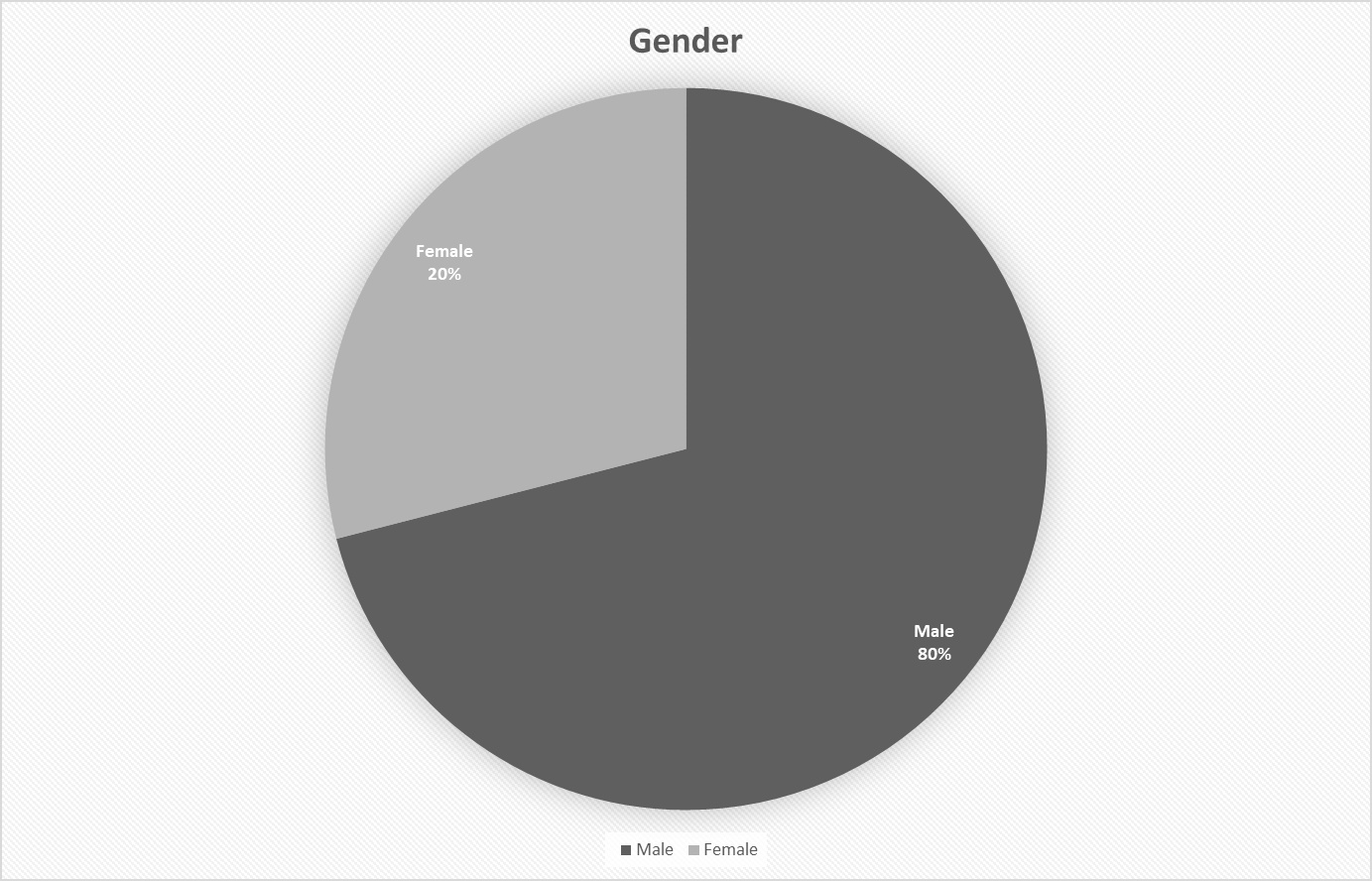
Graph1:Gender-wiseAuthorship Pattern
Institutional Affiliation of the Authors
Fifty-three authors from twenty-four institutions from India and abroad contributed fifty papers. Graph two reflects the contribution of top twenty-four institutes whose scholars presented papers in the 3rd international conference on Qur’an and Science 2026.Ten (41.6%) papers were presented by the authors affiliated with Aligarh Muslim University, Aligarh, India. Next highest contribution was made by the scholars of Jamia Millia Islamia, New Delhi, India with six (25%) papers and Shahid Beheshti University, Iran, and Maulana Azad National Urdu University, Hyderabad, India, with four (18.83%) papers each. Jamia Hamdard University, Hamdard Nagar, New Delhi rose to the fourth position by contributing four(16.66%) papers each. Aliya University, Kolkata, India contributed three (12.5%)papers. Out of these, two (8.33%) papers were contributed by the scholars of Osmania University, Hyderabad, India, Islamic University of Science & Technology, J & K, India, K.A. Niẓāmī Centre for Qur’anic Studies, Aligarh, Government Degree College, Kashmir, Maulana Mazharul Haque Arabic &Persian University, Patna, Bihar, India and Safi Institute, Kerala, India respectively. Other twelve institutes (from India and abroad) contributed one (4.16%) paper each. This shows that the scholars of the host University enthusiastically participated in the conference and significantly contributed to its themes. Moreover, other universities also made significant contribution to the conference. This trend shows strong institutional concentration, where the host institution and a few major universities dominated most academic partnerships, while the participation of other institutions remained dispersed and relatively limited.
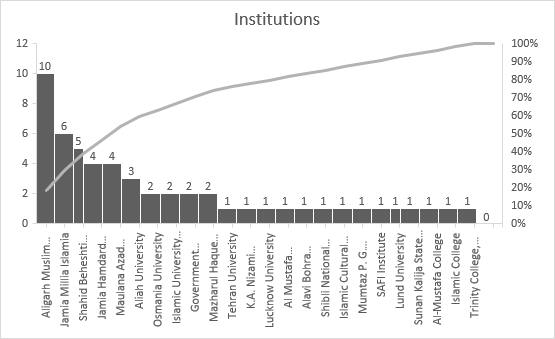
Graph2:Institutional Affiliation of the Authors
Country-Wise Distribution
The majority of contributors with 62.63% (34) were from India, followed by Iran with 27.27% (15), Kuwait, Sweeden, Indonesia, England and Ireland each with 1.81% (1) respectively. Under representation of the scholars from other countries may have been caused by the far distance from the venue of the conference. However, if the call for papers had been advertised more effectively and the presenters had been facilitated with travel grants and accommodation, the proportion of the scholars from the other countries might have been higher. This pattern reflects the strong national dominance of Indian scholars, while international participation has remained limited, pointing to geographical and institutional constraints and highlighting the need for better access, coordination and administrative facilities for effective global engagement.
| Sr. No. |
Country |
Total No. of Participants |
%age |
|
1 |
India |
33 |
63.63% |
|
2 |
Iran |
15 |
27.27% |
|
3 |
Kuwait |
1 |
1.81% |
|
4 |
Sweden |
1 |
1.81% |
|
5 |
Indonesia |
1 |
1.81% |
|
6 |
England |
1 |
1.81% |
|
7 |
Ireland |
1 |
1.81% |
|
Total |
53 |
1.81% |
|
Table 4:Country-Wise Distribution
II
Session-wise Analysis of the Conference
The intellectual and religious landscape of contemporary Iran boasts a rich literature on Quranic studies and science. Today, a significant number of experts in both empirical sciences and humanities are engaged in exploring various connections and relationships between the Quran and science. During the 13th administration of the Islamic Republic of Iran, due to the profound attention and interest of the martyred President Ayatollah Dr. Seyyed Ebrahim Raisi in the Holy Quran, special support was provided for studies on the Quran and science. One of the most important manifestations of this support was the organization of two international conferences on Science and the Quran. These two conferences were held by the Research Institute for Fundamental Studies of Science and Technology at Shahid Beheshti University in Tehran. The first conference took place on May 20-21, 2024, at the University of Tehran. More than 50 international specialists alongside over 100 Iranian experts exchanged ideas and views at this event. The second conference was held in late January 2025 at Ferdowsi University of Mashhad. It was the third conference in the series.
Inaugural Session
The inaugural session began with the recitation of the Holy Qur’an, followed by a ceremonial presentation of bouquets, shawls, and mementoes to the distinguished guests. Mr. Junaid Haris introduced the guests, while Prof. Shahid delivered the welcome address, underlining the importance of sustained dialogue between religion and modern knowledge systems.
Addressing the gathering, Dr. Aslam Parvaiz, former Vice-Chancellor of Maulana Azad National Urdu University (MANUU), Hyderabad, described the conference as a crucial academic initiative. He challenged the widespread perception that religion is confined to rituals alone, emphasising that the Holy Quran repeatedly urges human beings to use their intellect and senses. Quoting Quranic references, he said, “The Quran declares that those who do not use their reason are no better than animals.” He added that while the universe functions according to divine laws, humanity must reflect on whether it truly follows those principles in daily life.
Engineer Mustafa Abbas from Kuwait posed thought-provoking questions to the audience, asking whether the Quran remains relevant in the age of rapid technological advancement. “Do we obey Quranic principles as strictly as we obey traffic rules?” he asked. Stressing the enduring relevance of Quranic guidance, he said the Holy Quran offers timeless values and knowledge essential for individual growth and social harmony.
Addressing the audience, Prof. JamilehAlmolhoda, wife of former Iranian President Shaheed Ebrahim Raisi, said that such conferences were initiated to address growing misunderstandings about the Holy Quran. She noted that incidents of Quran desecration around the world reflect ignorance rather than knowledge. Expressing concern over weakening family structures, she said that younger generations, particularly Gen Z, are increasingly vulnerable due to lack of parental guidance. She warned that blind adoption of Western ideologies without ethical grounding poses challenges to social stability, and stressed that Quranic knowledge provides a comprehensive framework to confront these issues.
Renowned Islamic scholar Prof. Akhtarul Wasey congratulated Jamia Millia Islamia for organising the conference at a time of significant global and geopolitical challenges. He stated that the Qur’an has shed light on several aspects of modern science while consistently encouraging humanity to reflect on the universe and its creation. “There is no contradiction between the Quran and modern science,” he asserted, adding that the Quran’s primary purpose remains the moral and spiritual guidance of humankind.
Dr. Mohammad Fathali, Ambassador of the Islamic Republic of Iran to India, highlighted that discussions on the relationship between the Quran and science have continued for centuries. He said the Quran promotes knowledge, reasoning, argumentation, and ethical values, which remain deeply relevant in addressing contemporary global challenges.
Raising a fundamental question of modern times, Dr. Kalbe Jawad asked why a book revealed over 1,400 years ago should still be studied today. He argued that several Quranic insights align with scientific discoveries that were confirmed centuries later. He urged students and researchers to study modern science through the light of the Quran, cautioning that scientific theories often change and are revised over time.
In his presidential address, Prof. Mazhar Asif, Vice-Chancellor of Jamia Millia Islamia, offered a reflective observation on the Muslim engagement with the Holy Quran. “We read the Quran, but we do not understand it; and even when we understand it, we do not follow it,” he remarked. Emphasising the need to translate Quranic teachings into everyday practice, he highlighted values such as mercy, compassion, and justice. Referring to divine attributes reflected in human responsibility; he urged the audience to embody mercy and ethical conduct in social interactions.
A special highlight of the inaugural ceremony was the launch of a scholarly book, followed by keynote addresses by distinguished international scholars.
Prominent speakers included Prof. Ali Akbar Salehi (Iran), Prof. Oliver Scharbrodt (Sweden), and Ayatullah Prof. Abdolmajid Hakim Elahi (Iran), who shared insights on faith, ethics, science, and global responsibility in an increasingly interconnected world.
The conference featured 14 academic sessions, with 50 research papers and one training workshop presented by scholars from India and abroad.
First Session
The first session was chaired by Prof Obaidullah Fahad, Former Chairman, Department of Islamic Studies, Aligarh Muslim University and moderated by Mr. Junaid Haris, Sr. Assistant Professor, Department of Islamic Studies, Jamia Millia Islamia. The papers that were read in this session are: “The Commentary of the Holy Qur’an in the light of science,” by Prof. M Saud Alam Qasmi “Learning Like Humans: Lessons from the Qur’an and AI” jointly by Prof. Syeda Sameen Fatima and Dr Shaukat Ali Mira and “Social Forces in the Quran” by Dr. Reyhaneh Sadat Raeis Alsadati. The session, chaired and moderated by senior scholars, focused on examining the interrelationship between the Quran, science and artificial intelligence and highlighted an interdisciplinary perspective to understand knowledge, learning and scientific interpretation in a Quranic context.
Second Session
The second session was chaired by Prof. Alauddin Khan, Dept of History, Shibli National College, Azamgarh and moderated by Dr. Khurshid Afaque, Assistant Professor, Department of Islamic Studies, Jamia Millia Islamia. The papers that were read in this session are: “Biological Aspect of Life, From Birth to Life Style and Death,” by Prof. Dr. Mohammad Esmaeil Akbari and “Sacred Linguistic Empathy: How Women Translators Reframe Mental Distress and Divine Consolation” jointly by Dr. Nazeer Ahmad Majeed and Ms. Adiva Khatoon. The session examined the biological, exegetical and linguistic aspects of Quranic studies, with an emphasis on modern interpretation, stages of human life and gender perspectives in translation to cover contemporary intellectual and psychological issues.
Third Session
The third session was jointly chaired by Prof. Syed Shahid Ali, Head, Department of Islamic Studies, JMI and Prof. Mohd Habib, Head, Department of Islamic Studies, MANUU, Hyderabad and moderated by Dr. Anisurrahman, Assistant Professor, Department of Islamic Studies, Jamia Millia Islamia. The papers that were read in this session are: “Qur’anic Insights into Environmental Protection and Contemporary Ecological Challenges,” by Dr. Shakeel Ahmad “Protection of the Environment in the Light of Qur’anic Teachings” by Dr. Nadeem Ashraf and “Environmental Ethics in Islamic Context” jointly by Dr. Abida Qaunsar and Dr. Tariq Amir Najar. The session focused on the Quranic perspective on environmental ethics, highlighting the importance of Islamic teachings in addressing environmental responsibility, sustainability and contemporary environmental challenges.
Fourth Session
The fourth session was jointly chaired by Prof. Dr. Jamileh Alamolhoda, Former First Lady of Iran and jointly moderated by Dr. Mufti Mohammad Mushtak, Associate Professor, Department of Islamic Studies, JMI & Dr. Owais Manzoor Dar, Guest Faculty, Department of Islamic Studies, JMI. The papers that were read in this session are: “Tawhīdic Paradigm vis-à-vis Modern Science and Technology: An Evaluation” by Dr. Sheikh Jameil Ali and “Disease, A Manifestation of Thought-An Integrative Exploration of Disease Causation and Healing Through Medicine, Quran Anthropology and Consciousness State” by Dr. Sadiqa Umaima Babar. The session focused on methodological, philosophical and complementary topics, examining the monotheistic paradigm in the context of modern science and exploring a holistic approach to knowledge, health and scientific research methodology.
Fifth Session
The fifth session was chaired by Prof. Saud Alam Qasmi, former chairman, Department of Islamic Studies, AMU and moderated by Mr. Mohd Usama, Guest Faculty, Department of Islamic Studies, JMI. The papers that were read in this session are: “Scientific Foundations of Islamic Economic Principals Based on Quranic Teachings,” by Prof. Mohammad Suleman Siddiqi “Said Nursi’s Approach to the Qur’an and Science: A Study of the Mujizaat” by Prof. Obaidullah Fahad and “Mapping the Intersections: Typologies, Objectives and Pitfalls in Quranic Scientific Exegesis from a Methodological Perspective” by Dr. Mostafa Moradi. The session was an analysis of Quranic scientific interpretation, Islamic economic principles and Said Nursi’s perspective, emphasising methodological rigour and critical evaluation in interpreting science within a Quranic framework.
Sixth Session
The sixth session was chaired by Prof. Humayun Akhtar Nazmi, Professor & Director, Centre for West Asian Studies, JMI and moderated by Dr. Mohd Masihullah, Guest Faculty, Department of Islamic Studies, JMI. The papers that were read in this session are: “Qur’an-Inspired Scientific Curiosity and Discovery,” by Prof. Musheer Husain Siddiqui “QurʾānicEthics and the Sociology of Digital Surveillance” by Syed Mohammad Ali Aon and “Exploring Qur’anic Signs Through Science: Exploring Dr. HalukNurbaki’s Interpretive Methods” by Dr. Mohd. Masihullah. The session was an examination of scientific research, ethical challenges of digital surveillance and methodological approaches to interpretation, highlighting the importance of Quranic ethics in guiding scientific discovery and contemporary technological practice.
Seventh Session
The seventh session was chaired by Prof. Mohd Fahim Akhtar Nadwi, former head, Department of Islamic Studies, MANUU, Hyderabad and moderated by Dr. Mohd. Tahseen Zaman, Assistant Professor, Department of Islamic Studies, Mazharul Haq University, Patna. The papers that were read in this session are: “Metaphysical Psychology and the Qur’an: Addressing Modern Psychological Crises through Islamic spirituality,” jointly by Prof. Manzoor Ahmad Bhat and Mr. FazilGulzar, “Qur’an and Prophetic Medicine (Tibb al Nabawi)” by Dr. Zulqarnain Bhaisaheb and “Integration of Qur’anic Values and Tibb-e-Nabawi in Modern Healthcare Systems” by Dr. Mohd. Tahseen Zaman. The session focused on the psychological and medical aspects of Quranic teachings, emphasising the integration of Islamic spirituality, prophetic medicine and religious values into modern public health to provide effective responses to contemporary mental and physical health issues.
Eighth Session
The eighth session was chaired by Prof. Dr. Mohammad Esmaeil Akbari, Professor in Shahid Beheshti Medical Sciences University, Tehran, Iran and jointly moderated by Dr. Mufti Mohammad Mushtak, Associate Professor, Department of Islamic Studies, JMI & Dr. Owais Manzoor Dar, Guest Faculty, Department of Islamic Studies, JMI. The papers that were read in this session are: “Beyond the Setting Stars: Prophet Abraham’s Qur’anic Lessons for the Youth on Realism and Reflection,” by Prof. Dr. JamilehAlamolhoda, “Scientific Epistemology in Tafhīm al-Qur’ān: A Critique of Maududi’s Thought” by Prof. Ziauddin Malik and “Religion-Science Interaction: An Analysis in Light of Mushīrul Ḥaq’s Qurʾānic Thought” by Dr. Javed Akhatar. The session was an examination of the Quranic source of knowledge and the interrelationship between religion and science, with an emphasis on reflection for young people, a critical examination of modern interpretation and philosophical insights into how Islamic thought interacts with scientific knowledge.
Ninth Session
The ninth session was chaired by Prof. Mohammad Sulemian Siddiqui, former Vice-Chancellor, Osmania University., Hyderabad and moderated by Dr. Mohammad Ali, Guest Faculty, Department of Islamic Studies, JMI. The papers that were read in this session are: “The Quranic Paradigm of History, Culture and Civilization,” by Prof. Alauddin Khan, “Integrating the Qur’an and Science in Addressing the Mental Health and Meaning Crisis among Indonesian Youth” by Dr. Akmal Kamil, “Qur’an and Scientific Approaches” by Mr. Junaid Haris, “The Quran as Cure: Foundations and Applications of Prophetic Medicine (Tibb Al-Nabawi).” by Dr. Abroo Aman Andrabi and “Conflict Resolution in the Qur’an: Peace Building, Mediation and International Relations” by Dr. Md. Abrarul Haque. The session was an examination of history, culture, mental health, prophetic medicine and conflict resolution from a Quranic perspective, highlighting how the Quran is relevant and provides guidance in addressing civilizational challenges, psychological crises and peacebuilding issues in contemporary societies.
Tenth Session
The ninth session was chaired by Prof. Mohd Ishaque, former head, Department of Islamic Studies, JMI and moderated by Dr. Nadeem-e-Sahar Ambreen, Guest Faculty, Department of Islamic Studies, JMI. The papers that were read in this session are: “Qur’ānic Universalism: A Scientific Perspective,” by Prof. Syed Tayyab Raza Naqvi, “Non-Physical Laws of Human Life in the Qur’an-A Qur’an by Qur’an Study” by Prof. Syed Shahid Ali, “Education and Human Development, A Qur’anic Perspective” by Dr. Mohd Fahim Akhtar Nadwi and “Protection of the Environment, Quranic Teachings and the Muslims” by Dr. Khursheed Afaq. The session focused on Quranic universalism, human development, immaterial laws and environmental responsibility, highlighting the Quran’s comprehensive framework for scientific understanding, education, ethical living and a sustainable relationship with nature.
Eleventh Session
The eleventh session was chaired by Prof. Mostafa Moradi, Shahid Beheshti University, Tehran, Iran and jointly moderated by Dr. Mufti Mohammad Mushtak, Associate Professor, Department of Islamic Studies, JMI & Dr. Owais Manzoor Dar, Guest Faculty, Department of Islamic Studies, JMI. The papers that were read in this session are: “A Historical and Philosophical Perspective on Cosmology and the Qur’an: From Ancient Thought to Stephen Hawking,” by Prof. Hamidullah Marazi, “Ethics and Society in Modern Tafsir” by Prof. Oliver Scharbrodt and “Quranic Perspective of Environment – An Analytical Study” by Dr. Syed Abdur Rasheed. The session was an examination of cosmological thought, ethical aspects of modern interpretation and environmental analysis, highlighting the philosophical continuity between ancient and modern perspectives and the importance of the Quran in scientific and social ethics.
Twelfth Session
The twelfth session was chaired by Prof. Mushir Husain Siddiqui, former head, Department of Arabic, University of Lucknow and moderated by Ms. Maria Zehra, PhD Scholar, Department of Islamic Studies, JMI. The papers that were read in this session are: “Understanding Patterns of Religious Extremism (A Qur’anic Ethical Perspective),” by Prof. Mohd. Habib, “Concept of Human Rights in Islam” by Dr. Mohd Asim Khan, “Al-Qur’an and Contemporary Scientific Knowledge: A Special Study on the Origin and Development of Human Life” by Dr. Aijaz Ahmed and “The Concept of the Unity of Knowledge in Islam and Its Influence on Medieval Muslim Engagement with the Natural and Rational Sciences” by Dr. Sumaiyah Ahmed. “Scientific Hermeneutics in the Modern Qur’anic Exegesis” by Dr. Mohd Khalid Khan and Dr. Owais Manzoor Dar.. The session focused on Quranic ethics, human rights, scientific theories on the origins of man and the unity of knowledge, highlighting Islam’s comprehensive scholarly tradition in combating extremism, promoting justice and integrating religious and scientific perspectives.
Thirteenth Session
The thirteenth session was chaired by Prof. Tauqir Alam Falahi, Faculty of Theology at Aligarh Muslim University and moderated by Dr Md. Abrarul Haque, Assistant Professor, Department of Islamic Studies, Mazharul Haq University, Patna. The papers that were read in this session are: “Cosmic Signs of Qayamat and Modern Science,” by Dr Amir Husain Siddiqui, “The Artistic Qualities of Qurʾānic Stories (Qasas al-Quran) and Their Impact on Human Life” by Dr. Mohd Shamim Akhter Qasmi and “Beyond Mechanism and Meaning: A Comparative Epistemology of Scientific Inquiry in the Quranic and Conventional Paradigms” by Dr. Syed Mohammed FazalurRehman. The session centred on occultism, traditional aesthetics, Quranic psychology and the origins of knowledge, emphasizing how cosmic symbols, the inner self and comparative scientific paradigms shape human understanding, meaning and spiritual and intellectual development.
Fourteenth Session (Online)
The fourteenth session was chaired by Dr. Safia Amir, associate professor, Department of Islamic Studies, Jamia Hamdard University, New Delhi and moderated by Dr. Abida Kausar, Assistant Professor, Assistant Professor, Department of Islamic Studies, GDC, J & K. The papers that were read in this session are: “Women and Family Empowerment through the Qur’an,” by Dr. Safia Amir, “Family and Women’s Rights in Islam: A Qur’anic and Social Justice Perspective” by Dr. Uzma Khatoon, “Discussions of Modern Sciences in Indian Tafseer Literature: Special Reference to Tarjuman al-Quran” by Dr. MdLalchandSk, “The Qur’anic Worldview and Modern Scientific Discovery: Scientific Signs in the Qur’an with Reference to Cosmology, Earth Sciences, and the Origin of Life” by Dr. Syed Shah SamiullahHussaini, “Revisiting Qur’anic Family Ethics: A Comparative Reading of Imami Tafsir and Modern Islamic Feminist Approaches” by Dr Qudsi Rizvi, “The Quranic Concept of Family as a Pivotal Social Institution” jointly by Dr. Shebeeb Khan P and Nasimudheen MP and “The Concept of Sakīnah (Inner Peace) in the Qur’an and its Therapeutic Implications” by Bilal Ahmad Kutty. The session highlighted the Quranic perspective on women, family, social justice, inner peace and psychology, incorporating modern scientific insights and a feminist perspective to emphasise moral guidance, empowerment and all-round human development in Islamic thought.
Training Workshop
The training workshop was chaired by Prof. Ali Mohammad Naqvi, from Aligarh Muslim University and moderated by Dr. Muhammad Mushtak & Dr. Owais Manzoor Dar. The presentation was made by Prof. Dr. Ali Mostafa Moradi on the topic “Mapping the Intersections: Typologies, Objectives & Pitfalls in Qur’anic Scientific Exegesis from a Methodological Perspective”. This workshop critically examined scientific Quranic commentary, focusing on its types, objectives, methodological challenges and potential shortcomings in interpreting the scripture from a scientific perspective.
Valedictory Session
The three-day event culminated in a valedictory session on January 30, 2026, at 10:00 AM in the CIT Conference Hall, JMI. Presiding over the valedictory session, Ayatollah Prof Abdul Majid Hakim Elahi, representative of Iran’s Supreme Leader, said the Quran provides purpose, direction and moral meaning to scientific inquiry and links research with ethical responsibility. The chief guest, Dr Rehana Sadat Raisi, daughter of late Iranian President Ebrahim Raisi, highlighted the unity of the Muslim community based on shared belief in monotheism and the Quran, despite differences of language and ethnicity. Guests of honour, including Prof Mohammad Mehdi Esmaili, former Iranian minister, and Prof Dr Mohammad Ismail Akbari of Shahid Beheshti University of Medical Sciences, underlined the Quranic vision of life centred on justice, spirituality and social responsibility.
Several scholars, including Prof Mushir Hussain Siddiqui, Prof Mohammad Faheem Akhtar Nadwi and Dr Mohammad Hussain Ziaei Nia, spoke on re-flection, critical thinking and the need to re-engage modern science through a Quranic understanding of knowledge and ethics. The session concluded with a detailed report presented by Dr Haider Raza Zabti.
Prof Iqtidar Moham-mad Khan, Director of the Seminar and Dean of the Faculty of Humanities and Languages, said the Quran offers an ethical and intellectual framework that gives human research its direction and significance.
Conclusion
The above statistical analysis shows that fifty-five research papers were presented by fifty scholars. A significant number of papers were presented by the host universities. Most of papers were single-authored and by male presenters. All of the articles were presented in English language. According to the profession-wise categorisation, the top three categories were professors, head and assistant professors. As for the country representation, majority of paper presenters were from India and Iran. Conferences bring together scholars of relevant academic disciplines from different geographical areas. They also provide participants with the opportunities of sharing their views, ideas and experiences with others. The message of this three-day international conference on “Quran and Science” is to bring together a significant number of experts from both empirical sciences and humanities and to engage them in exploring various connections and relationships between the Quran and science in the contemporary world. Special measures to provide travel grants and accommodations to the scholars will hopefully increase their representation. The importance of English cannot be overemphasised but the scholars should also be encouraged to present their papers in Hindu and Urdu for the wider dissemination of such conferences. There should also be greater participation of the ulama in such conferences, which was felt to be lacking in the present conference.
The framework of this article has been adopted from the analysis of some research works of Mohamed Taher, Quantitative Study of Islamic Literature, M.D. Publications, New Delhi, 1993; Sajjadur Rahman and Roslina Othman, Islamic Economics Literature: A Bibliometric Analysis, Intellectual Discourse, 1994; Abdullah Raihanah and AsmakAbRahman, Fifteen Years of Jurnal Syariah (1993-2007): A Bibliometric Study, Malaysian Journal of Library and Information Science, 2009; Mumtaz Ali Anwar, Muslims and Europe: A Demographic Study of Citations from the Index Islamicus Database, Malaysian Journal of Library & Informaiton Science, 2001; Abid Husain, Muhammad Ibrahim and Sarah Saeed, A Bibliometric Analysis of Contributions in Islamic Studies journal: 2009-2011, Pakistan Library Association Journal (online), 2016; Saeed-ur-Rahman and Faisal Mehmood, HEC Recognized Local Research Journals in Islamic Studies: An Overview (Urdu),Tahdhib al Afkar, 2015; Saeed-ur-Rahman, Mujalat-e Islamiyat (National Directory Islamic Studies Research Journals), Alilim Publications, Peshawar, Pakistan, 2018; also Rauf Ahmad, Librarian, Dr Muhammad Hamidullah Library, Islamic Research Institute, International Islamic University, Islamabad, Pakistan; Mohamed Taher, Islamic Studies in India: A Survey of Human, Institutional and Documentary Sources, Concept Publishing Company, New Delhi, 2017. Dr. Mohamed Tahir (b. 1955), is a staff of the American Studies Research Centre, Hyderabad, India. He has worked primarily as a library professional, but has also taught, at times, Library Science students in different institutions.
For further details, please refer to the conference file available in the Department of Islamic Studies, Jamia Millia Islamia, New Delhi.
For further details, please refer to the conference file available in the Department of Islamic Studies, Jamia Millia Islamia, New Delhi.
https://muslimmirror.com/international-conference-on-the-quran-and-science-takes-off-at-jamia-millia-islamia/.
For further details, please refer to the conference file available in the Department of Islamic Studies, Jamia Millia Islamia, New Delhi.
See various reports such as: media reports, press conference reports, etc.
The Department of Islamic Studies, Jamia Millia Islamia and Welay at Foundation, New Delhi, India in Collaboration with Shahid Behishti University, Tehran, Iran organised a three-day international conference on “Quran and Science” on January 28-30, 2026 at Jamia Millia Islamia. The conference was sponsored by Welay at Foundation, New Delhi and the local logistics were provided by Jamia Millia Islamia. Ayatullah Professor Abdul Majeed Hakeem Elahi, the Representative of the Supreme Leader of Iran in India, and Prof. Mazhar Asif, the Honourable Vice-Chancellor of JMI, were the Chief Patrons; Prof. Md. Mahtab Alam Rizvi, Registrar of JMI, was the Patron; and Prof. Iqtidar Mohd Khan, Head of the Department of Islamic Studies, JMI, was the Director of the Conference.
Dr. Aslam Parvaiz, former Vice-Chancellor, MANUU, Hyderabad, gave the keynote address in the conference and six speeches were made by the honoured guests, Engineer Mustafa Abbas, Kuwait, Prof. Ali Akbar Salehi, Iran, Prof. Jamile Alamolhoda, Iran, Prof. Akhtarul Wasey, Professor Emiratus, Department of Islamic Studies, JMI, Dr. Mohammad Fathali, Iran, Prof. Oliver Scharbrodt, Lund University, Sweden, Prof. Md. Mahtab Alam Rizvi, the Registrar, JMI, Ayatullah Prof. Abdolmajid Hakim Elahi, the representative of the Supreme leader of Iran. The conference was presided over by Prof Mazhar Asif.